
LOWER MAKES YOU SLOWER
INTRODUCTION
For many years, the general belief was that going with a lower cockpit position or handlebar was making cyclists faster. Then, that philosophy changed first on Time Trial bikes. Engineers and sports scientists discovered that forcing a rider into an ultra-low, stretched-out position eventually hit a wall of diminishing aerodynamic and metabolic returns. Instead, the paradigm shifted toward higher elbows, an increased forearm angle, and hiding the rider's head and helmet directly behind their hands.
This structural shift gave time trialists the ability to become significantly more compact in the front. With higher elbows, higher hands, a narrower elbow stance, and the head cleanly positioned behind the arms and hands, riders unlocked an entirely new anatomical advantage: the ability to achieve higher scapular retraction and an aggressive shoulder shrug. All of this made time trialists undeniably faster.
Could the same be achieved on a road bike?
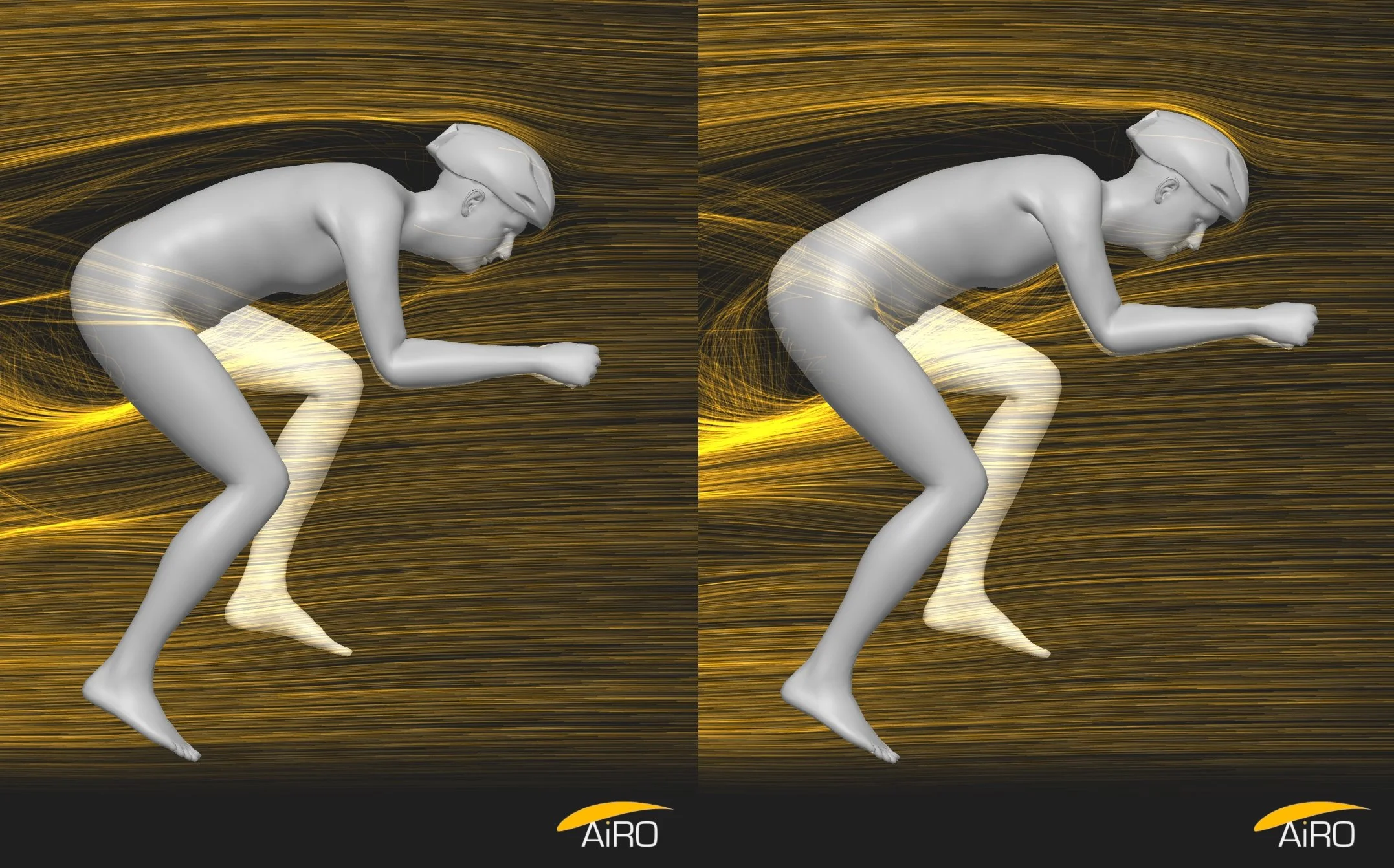
From low & short (left) to high & long (right)
The professional peloton didn't just ask this question; pioneering riders began actively manipulating their hardware to exploit it. The most striking real-world manifestation of this theory was Dutch professional Jan-Willem Van Schip's radical forward-facing position. Utilizing highly unconventional stem lenght and angle & handlebar width and orientation, his setup replicated a track or time trial position on a standard road bike, physically supporting his forearms and elevating his hands to force an extreme thoracic and shoulder tuck.
The position was so aerodynamically dominant, but also questionnable in term of riders safety, that it was ultimately banned by the UCI under strict equipment compliance rules. However, the engineering proof was undeniable: raising the front end to allow the human body to collapse into a smaller, tightly integrated silhouette made him systematically faster than stretching out over a super low, slammed stem.
THE MORPHEUS BIKES AND LATEST AERO ENDURANCE BIKES PHILOSOPHY
To decode why a lower front end can make a cyclist slower, we look to the design framework of innovators like Morpheus Bikes. Their core philosophy argues that a bicycle frame cannot be optimized in a vacuum; its geometric performance is entirely dependent on the active biomechanical and aerodynamic limits of the human engine.
When a rider is forced into a traditional, aggressively low road geometry, two fluid dynamic and physiological penalties occur simultaneously:
The Biomechanical stress: The hip angle closes down excessively at the apex of the pedal stroke. This directly degrades sustainable wattage output. Shorter crank arms help opening the hip angle but they also require increasing saddle height which also increases saddle to handlebar drop thus requiring increasing the handlebar stack even more.
The Aerodynamic Paradox: As the chest is pulled down too close to the top tube, the shoulders naturally widen out to support the skeletal weight of the torso. To see the road ahead, the rider must crane their neck upward, lifting both head and helmet into the clean air stream, generating massive flow separation and turbulent wake behind the back.
By re-engineering front-end geometry to support higher hand placement, the Morpheus philosophy decompresses the rider's upper body. This preserves an open hip angle for unconstrained muscular recruitment while giving the rider the literal physical space needed to drop their head into the clean air pocket carved out by their hands.
Endurance bikes launching in 2026 tend to share some of those principles: aero shapes, lower bottom bracket, higher handlebar stack. Although trending in the right direction, they often lack a few millimeters of reach and achieve proper front to center distance (to prevent toe overlap) by offering a slacker head tube angle and forks with slightly more rake. It makes for more stable bikes to the detriment of faster, racier handling that racers may prefer.
The Hardware Evolution: Rise Cockpits
Historically, raising a cockpit meant stacking multiple round headset spacers underneath a conventional stem—a solution that is both structurally inefficient and aerodynamically dirty. To facilitate this high-hands positioning without compromising frontal area aesthetics or internal cable management, advanced component designs have emerged.
Many examples of rise handlebars were implemented over the years, including Specialized own Venge Vias handlebar introduced in 2015. They were laughed at the time, as we were still in the “slam your stem” era.
Nowadays, integrated aerodynamic setups, such as the Tavelo Rise Cockpit, natively build 15mm to 25mm of clean, vertical rise directly into the carbon handlebar structure itself. This enables the stem to remain perfectly slammed and flush with the top tube (preserving a minimal frontal area profile), while positioning the brake hoods higher to support tilted forearms, narrower elbow tracking, and a relaxed, compressed spine.
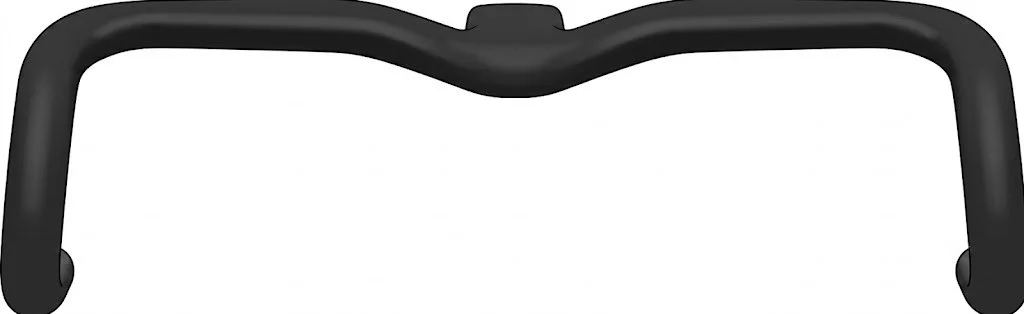
Example of a cockpit/handlebar with increased stack
METHODOLOGY
To rigorously evaluate the aerodynamic impact of cockpit height versus active anatomical adaptation, we focused our virtual wind tunnel testing on the AiRO Team's most aerodynamically challenging athlete: Joe, with his Men's Sprinter archetype (190cm, 85kg). Due to his muscular, broad-shouldered build, Joe experienced severe interaction drag penalties in our Part 1 handlebar width tests when forced to go narrow without positional modifications.
We executed a meticulous 9-stage geometric matrix on a simulated Mid-Tier Aero Road bike equipped with a Specialized Evade 3 helmet.
We systematically isolated variables across stack height increments (+4cm and +8cm), elbow tracking widths, reach extensions (+2cm, +4cm), and active muscular manipulation (scapular retraction and maximum upper-body shrugging).
DATA ANALYSIS: THE RESULTS
The data from our 9-stage matrix demonstrates that a geometric increase in stack and reach yields severe aerodynamic penalties if the athlete remains static. Conversely, when an increased stack and reach are intentionally utilized as a gateway to alter body posture, it allows the rider to morph into a significantly more aerodynamic silhouette, yielding extraordinary drag reductions.
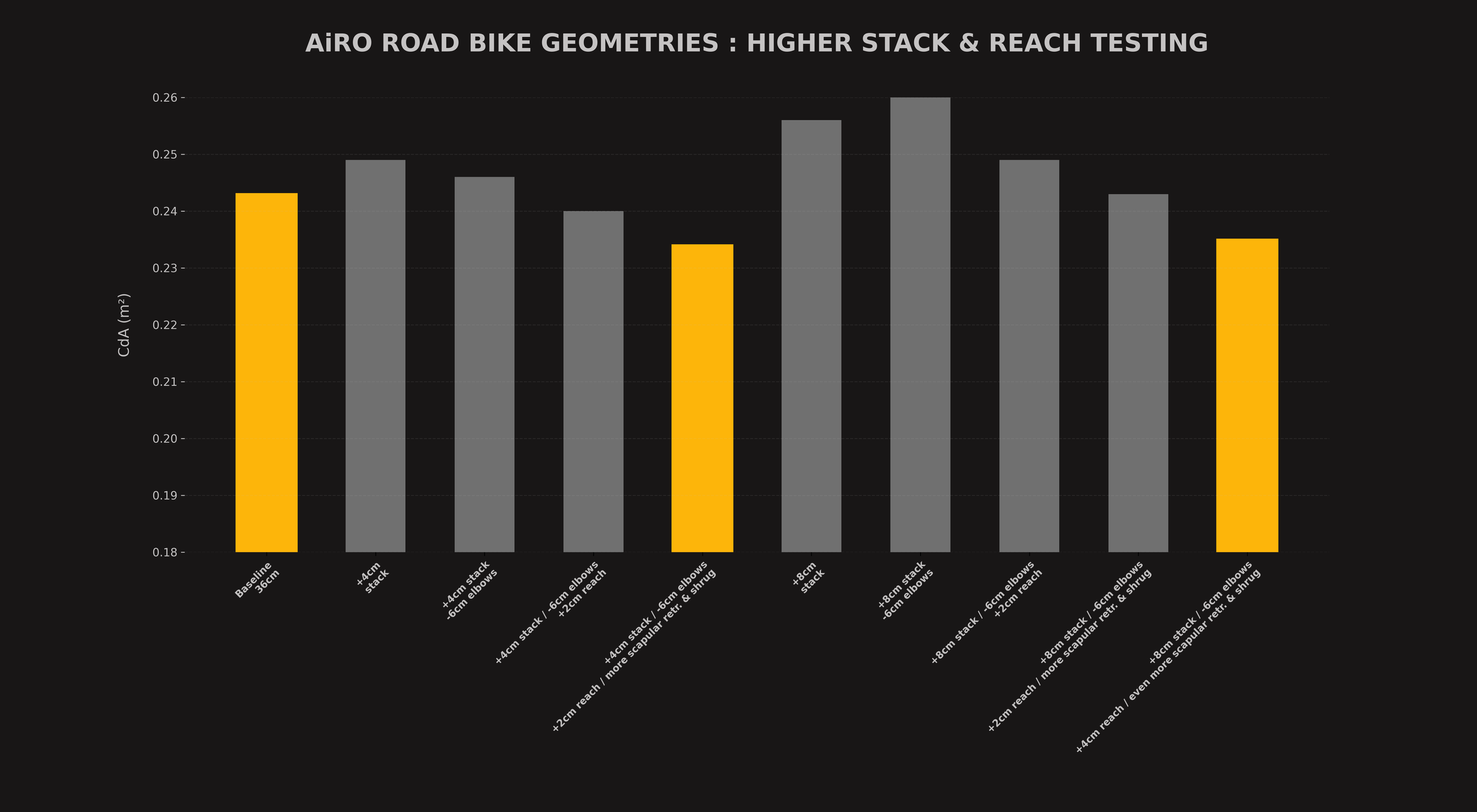
CdA evolution iterating from a low position to a higher & longer position
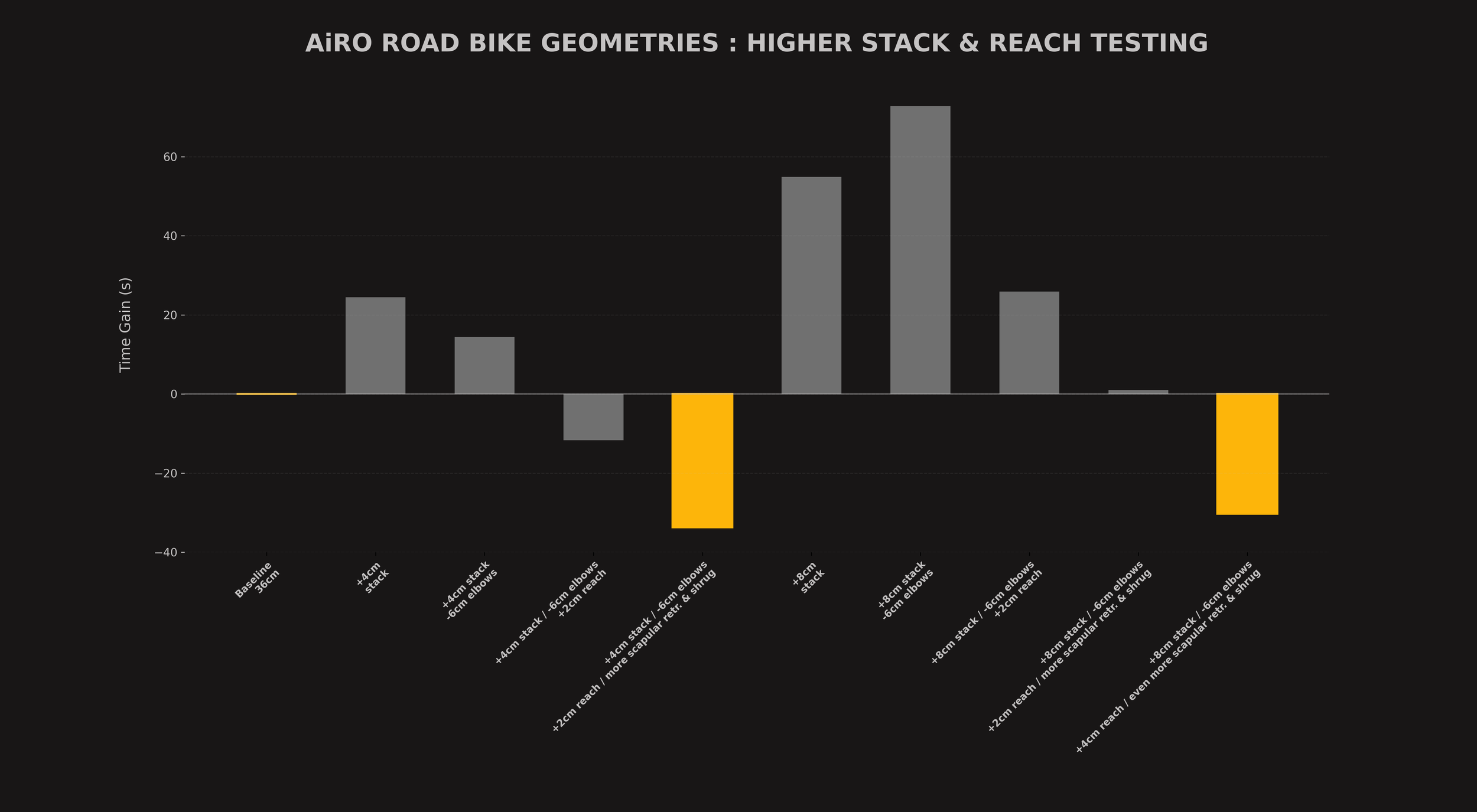
Times improvements over 40km iterating from a low position to a higher & longer position
The High-Stack Sail Effect (Tests 01 & 05): Simply raising Joe's stack height by 4cm or 8cm without modifying reach or posture increases his CdA to 0.249 and 0.256 respectively. Without changing how the body behaves, higher handlebars simply catch more oncoming wind.
The Elbow Narrowing Trap at Extreme Stack (Test 06): At an extreme +8cm stack, forcing the elbows 6cm narrower resulted in our worst measured configuration CdA at 0.260, 73 seconds. This shows that narrowing a rider's limbs when their torso is highly upright completely tears the boundary layer of airflow away from the lower back, resulting in a massive turbulent pressure wake.
The Postural Breakthrough (Test 04): The ultimate aerodynamic performance profile occurred at a +4cm stack height when Joe coupled an extended cockpit with active muscular manipulation. By elevating his hands, the static tension across his upper torso decreased sufficiently to execute a radical biomechanical shrug. This allowed his head to drop cleanly into the negative pressure zone carved out between his forearms, reducing his Coefficient of Drag area (CdA) to an incredible 0.234. This optimized structural layout completely shields the chest cavity and forces laminar airflow to route smoothly over the shoulders.
The Extremely optimized high stack position (Test 09): Remarkably, our simulations proved that aerodynamic efficiency does not automatically decay as the cockpit moves vertically upward. In Test 09, despite raising the handlebar stack to an extreme +8cm, which sits a full +4cm higher than our primary breakthrough position and +8cm higher than the baseline, Joe achieved a close second place in overall speed. By complementing this high-stack position with a +4cm reach extension and deep scapular retraction, his CdA was held down to an ultra-competitive 0.235, generating a substantial 31 seconds in time savings over a 40km course.
Technical Insight: The razor-thin 0.001 CdA delta between Test 04 and Test 09 is a revolutionary finding for bike fitters. It demonstrates that if a rider can successfully re-engineer their upper-body posture, they can achieve elite-tier aerodynamic drag reductions even when utilizing a dramatically higher, highly sustainable cockpit position. Front-end height is no longer the enemy of speed; it now provides new opportunities to associate maximum power output, sustainability all while being very aerodynamic.
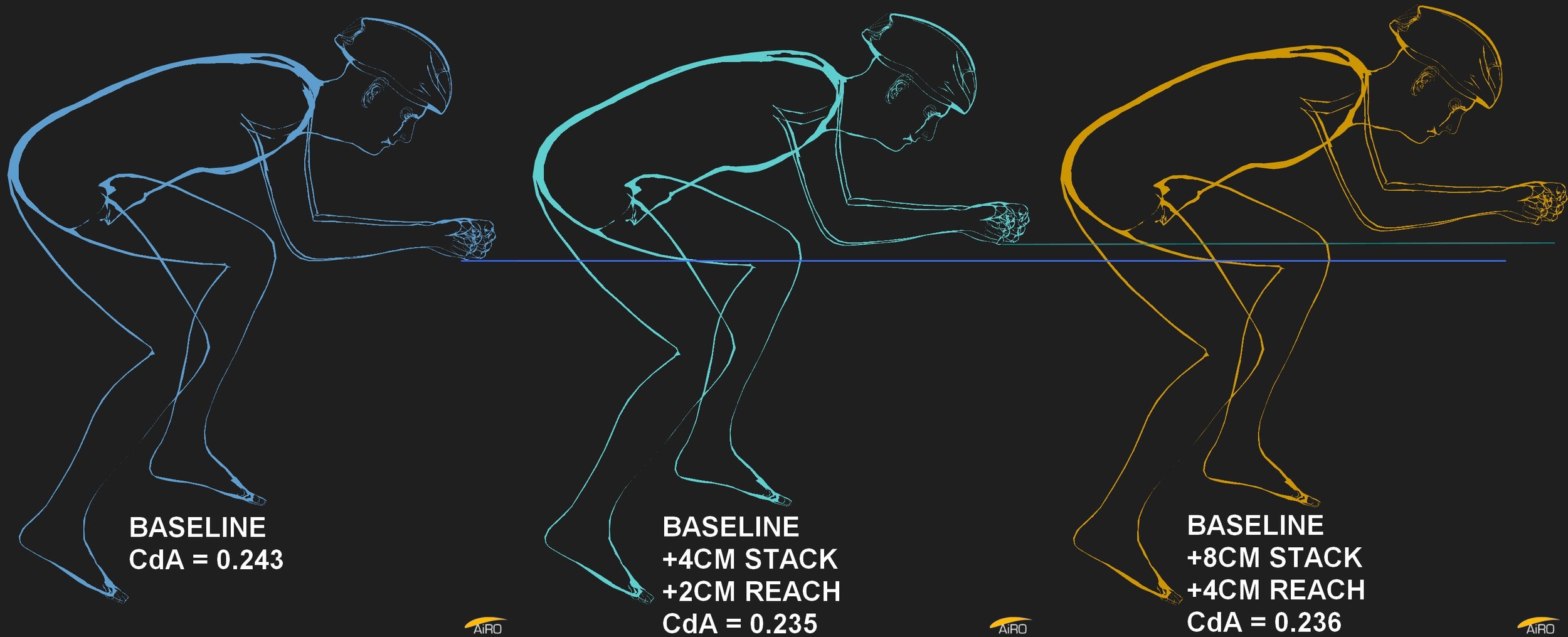
Baseline position (blue) / Fastest +4cm stack position (green) / Fastest +8cm stack position (yellow)
CONCLUSION: THE AiRO ADVANTAGE
The era of sacrificing biomechanical efficiency for a "theoretical" aerodynamic look is officially over. The data generated by AiRO proves that applying time trial positioning philosophy to standard road setups is one of the most effective ways to cheat the wind. Higher hands and a shrugged profile allow the rider to become a smaller, slicker object in the wind tunnel while keeping their lungs open and their legs producing maximum power.
HOW BIKE FITTERS CAN USE THIS DATA
For modern bike fitters, AiRO removes the guesswork from cockpit customization. Instead of guessing how many spacers to leave under a client's integrated handlebar, fitters can use the AiRO platform to:
Simulate the exact aerodynamic penalty or gain in order to define a customer’s handlebar stack before cutting a fork steerer tube or ordering a different cockpit.
A/B test a rider's ability to shrug across different handlebar reaches and drops.
Protect Power Delivery: Optimize your client's front-end height to preserve their hip angle while tracking their drag reductions step-by-step, ensuring comfort never compromises speed.
Stop slamming. Start simulating.
